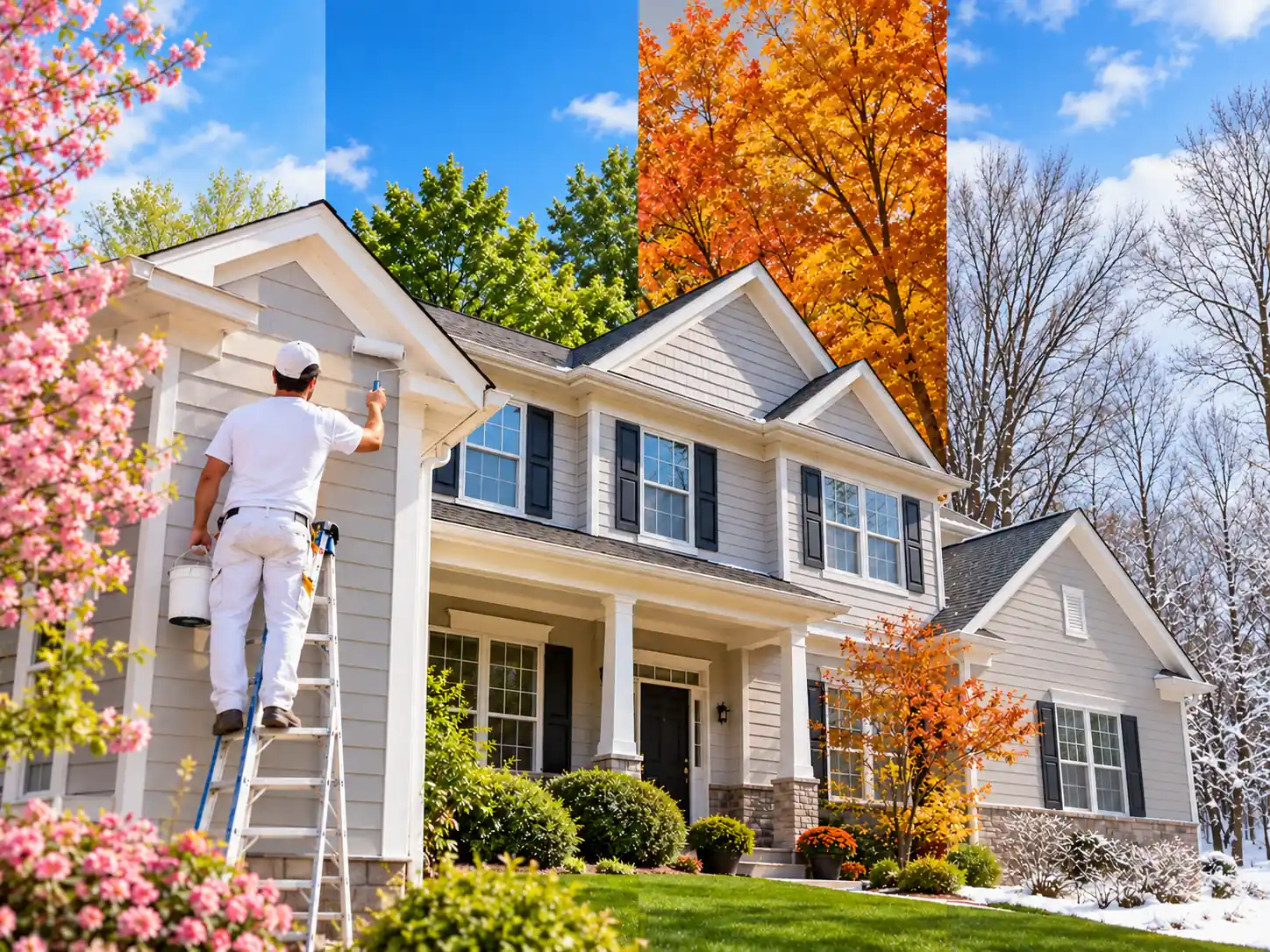
Maybe you noticed a section of siding starting to peel after last week’s storm. Maybe you’re prepping the house to list this spring and want the exterior to make a strong first impression. Or maybe you’ve just been putting this off for two years, and every “expert” you’ve asked has given you a different answer about when to actually schedule it.
Your neighbor swears by spring. A coworker says fall gave her the best results. A contractor you called last week said summer works fine too. With that many opinions floating around, it’s hard to know which season actually sets your paint job up to last, especially when you’re the one footing the bill if it fails early.
Here’s the truth: exterior painting isn’t about picking a month off a calendar. It’s about weather conditions, your home’s current condition, and how well the project gets prepped and executed. Get those three things right, and your paint job can hold up beautifully for a decade or more. Get them wrong, and even premium paint can peel, blister, or fade years ahead of schedule.
The Job You’re Really Trying to Get Done
When you search for the “best time to paint a house,” you’re not actually shopping for paint. You’re trying to solve a bigger problem.
You’re trying to move away from:
- The frustration of getting conflicting advice from every neighbor and contractor
- The anxiety of spending thousands of dollars on a job that could fail early
- Watching a small problem, like a peeling patch or exposed wood, get worse while you wait for the “right” season
- The risk of hiring the wrong crew at the wrong time and paying for it twice
And you’re trying to get to:
- A home that’s protected from moisture, sun, and temperature swings
- A finish that lasts as long as possible
- No surprise repainting bill sooner than you budgeted for
- A schedule that actually makes sense for your home, not just a generic calendar rule
Timing is simply the tool that helps you get from the first list to the second. Once you see it that way, the “best season” question becomes a lot easier to answer.
Why Timing Matters More Than Most Homeowners Realize
Paint isn’t just something you brush onto a wall and forget about. It’s a chemical process, and that process is sensitive to the conditions around it.
- Temperature affects curing. Most exterior paints need air and surface temperatures within a specific range to cure properly. Too cold, and the paint can’t form a durable film. Too hot, and it dries before it has a chance to bond with the surface.
- Humidity affects adhesion. High moisture in the air slows drying time and can trap moisture underneath the paint film, leading to bubbling or peeling down the road.
- Rain delays projects and damages fresh paint. A downpour on a freshly painted wall can wash away pigment or leave streaking before the coat has a chance to set.
- Direct sunlight affects drying speed. Painting a wall in full afternoon sun can cause the surface to dry too quickly, leading to lap marks and uneven texture.
- Wind introduces debris. Dust, pollen, and leaves can land on wet paint and get sealed into the finish.
Professional painters plan around all of these factors, which is exactly why timing matters more than most homeowners expect.
Is There Really a “Best” Time to Paint a House in Virginia?
Not really a single one. There isn’t one perfect month that beats every other month for every house.
What matters more is a combination of:
- Weather conditions during the project window
- Surface temperature (which is often different from the air temperature)
- Moisture levels in the air and in the substrate itself
- How well the surface gets prepped before paint goes on
A house painted on a mild, dry day in November can outperform the same house painted on a humid, 95-degree day in July. That’s why the smartest approach is understanding how each season behaves in Virginia, then working with a painting contractor who monitors conditions closely rather than just filling a spot on the calendar.
Spring Exterior House Painting
Pros
- Comfortable temperatures for both the crew and the paint
- Good drying conditions after winter’s cold, damp months
- A natural time to refresh your home’s exterior before spring and summer gatherings
Cons
- Virginia spring brings frequent rain, which can push back start dates
- Pollen season coats everything in a yellow film, including wet paint
- Contractors book up quickly, so scheduling early matters
Summer Exterior Painting
Pros
- Long daylight hours give crews more working time each day
- Warm, dry stretches allow projects to move quickly
Cons
- Peak heat can push surface temperatures well above safe painting ranges
- High humidity slows drying and curing
- Afternoon thunderstorms are common and can interrupt a project mid-coat
Fall Exterior Painting
Many painting contractors consider fall the sweet spot in Virginia, and for good reason.
- Temperatures stay stable without the extremes of summer or winter
- Humidity typically drops compared to the muggy summer months
- Paint cures more evenly under these conditions
- Crews and homeowners both work in more comfortable weather
Virginia’s fall stretch, particularly from September through early November, tends to offer some of the most consistent painting conditions of the year around Richmond.
Can You Paint a House During Winter?
Sometimes, yes. It depends on the product, the temperature, and the specific weather window.
Some modern exterior paints are formulated to cure at lower temperatures than traditional formulas. On a mild winter day with enough sun and dry conditions, a project can move forward successfully. But a cold snap, an early frost, or a wet system rolling through changes everything. This is why winter painting decisions come down to day-by-day judgment rather than a blanket rule for the whole season.
Richmond Weather and Exterior Painting
Richmond’s climate throws a mix of challenges at exterior paint throughout the year:
- Humid summers that slow drying and stress paint film
- Intense summer heat that can push surface temperatures past safe ranges
- Frequent rain in spring and periodic storms in summer
- Freeze-thaw cycles in winter that stress wood and siding
- Strong UV exposure that fades color over time
- Heavy pollen in spring that can settle into wet paint
Local experience matters here. A contractor who paints exclusively in one climate zone knows how to read Richmond’s weather patterns and adjust scheduling accordingly, rather than relying on generic seasonal advice that doesn’t account for local conditions.
Should You Wait Until Next Season?
This is often the real question behind “when’s the best time to paint.” Here’s a simple way to think through it.
Paint now if:
- Bare wood is exposed anywhere on the exterior
- Paint is actively peeling, cracking, or blistering
- Moisture appears to be getting behind the siding or trim
- You’ve already noticed rot starting in wood surfaces
It’s reasonable to wait if:
- The exterior only shows dirt or light dinginess
- Fading is minor and cosmetic
- Current weather conditions aren’t suitable for a quality paint job
If your home falls into that first list, waiting for the “ideal” season can end up costing you more. Exposed wood and active moisture problems get worse with every month they sit untreated, and what would have been a straightforward paint job can turn into a repair project.
How Professional Exterior Painters Plan Around Weather
Experienced painting contractors don’t just check a calendar and pick a start date. They track:
- Extended weather forecasts before committing to a schedule
- Surface moisture levels using a moisture meter, not just a visual check
- Temperature throughout the day, not just the daily high
- Shade and sun exposure on each side of the house
- Expected drying and recoat times based on current humidity
This kind of monitoring is what separates a paint job that lasts 10-plus years from one that starts failing within two or three.
How Brush & Build Helps Homeowners Choose the Right Time
At Brush & Build, we’d rather tell you the truth about timing than rush a project just to get it on the books. Our approach includes:
- Honest scheduling based on your home’s actual condition, not a sales calendar
- Ongoing weather monitoring throughout the project window
- Flexible planning that adjusts if conditions shift
- A full surface inspection before we ever recommend a start date
- No-pressure recommendations, even if that means suggesting you wait a few weeks
If weather conditions aren’t right for a durable finish, we’ll tell you. We’d rather delay a project by two weeks than deliver a paint job that fails in two years.
The Bottom Line
There isn’t a single “best month” for exterior house painting in Virginia. The best time depends on your home’s condition, the current weather, and how well the project gets prepared, not simply the season on the calendar. If your home’s exterior is starting to fail, waiting for the “perfect” month can cause more damage than scheduling the project sooner. At Brush & Build, we help homeowners throughout Richmond plan exterior painting projects around real weather conditions, so the finish holds up against everything Virginia’s climate brings.
Ready to talk timing for your home? Reach out to Brush & Build to schedule a free exterior inspection and get an honest recommendation on when to start.
Frequently Asked Questions
What is the best month to paint a house in Virginia?
There’s no single best month for every home. Fall, especially September through early November, tends to offer the most consistent temperatures and lower humidity, but the right timing also depends on your home’s current condition.
Is spring or fall better for exterior painting?
Fall generally offers more stable painting conditions in Virginia, with less rain and lower humidity than spring. Spring works well too, but pollen and frequent rain can create more scheduling challenges.
Can exterior painting be done during summer?
Yes, but summer heat and humidity require careful planning. Crews often need to work around the hottest part of the day and monitor surface temperatures closely to avoid drying issues.
Can you paint a house in winter?
Sometimes. Mild, dry winter days can work, especially with paints formulated for lower temperatures. Cold snaps, frost, and wet weather make winter painting unreliable without close monitoring.
What temperature is too cold for exterior painting?
Most traditional exterior paints need air and surface temperatures above 50 degrees Fahrenheit to cure properly, though some modern formulas allow for lower temperatures. Surface temperature, not just air temperature, is the key factor.
Does humidity affect exterior paint?
Yes. High humidity slows drying time and can trap moisture beneath the paint film, which increases the risk of peeling or blistering later on.
Should I wait until next spring to repaint?
Only if your home’s exterior shows minor cosmetic issues like dirt or light fading. If you’re seeing exposed wood, peeling paint, or signs of moisture intrusion, waiting can lead to more costly repairs.
How long does exterior paint take to cure?
Full curing typically takes several weeks, though the paint is often dry to the touch within hours. Cooler temperatures and higher humidity extend the curing timeline.
How far in advance should I schedule exterior painting?
Booking four to six weeks ahead is a good rule of thumb, especially during popular seasons like spring and fall when contractor schedules fill up quickly.
Does weather affect paint durability?
Significantly. Paint applied in unsuitable weather, whether too hot, too cold, too humid, or too wet, is far more likely to fail early through peeling, blistering, or poor adhesion.