
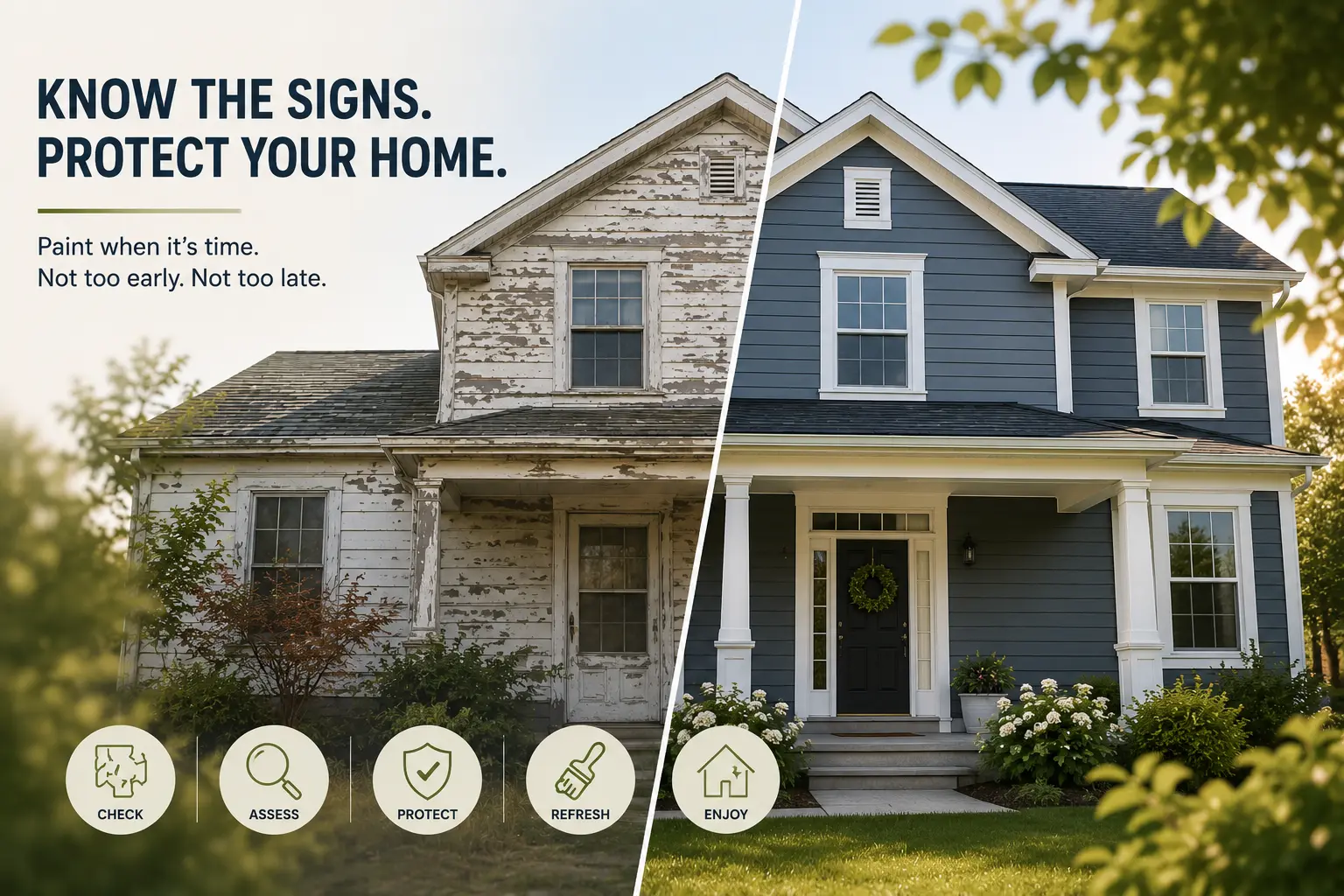
You notice peeling paint, faded siding, or cracked trim every time you pull into your driveway. Maybe a few neighbors have recently repainted their homes, and now you’re wondering if yours needs attention too. The tricky part is that it’s not always obvious whether you’re looking at normal wear or an early sign that your home’s exterior protection is starting to fail.
This guide walks you through exactly how to tell. We’ll cover the real warning signs, explain what each one actually means, and show you when exterior painting can wait and when it protects your home from bigger problems down the road. By the end, you’ll know whether your house needs exterior painting now or whether simple maintenance will hold you over for another season.
At-a-Glance: Paint Now or Wait?
| If you’re seeing… | What it usually means |
| Peeling, cracking, or bubbling paint | Paint Now |
| Exposed or soft wood | Paint Now |
| Faded color but no cracking | You Can Wait |
| Dirty siding with no damage | Clean, Don’t Paint |
| Failing caulk around windows or trim | Recaulk, Then Reassess |
| Water stains or recurring mold | Paint Now (After Repairs) |
The Job You’re Really Trying to Get Done
When you search “does my house need exterior painting,” you’re not really shopping for paint. You’re trying to:
- Protect your home’s exterior from weather and moisture
- Prevent small problems from turning into expensive repairs
- Keep your curb appeal looking sharp
- Preserve your property value
- Avoid repainting too early, or waiting so long that damage sets in
Paint is just the tool. Protecting your home is the actual job.
Why Is It So Hard to Know When to Repaint?
You’re not overthinking this. A few things make the decision genuinely confusing:
- Paint fades gradually, so you don’t notice the change day to day
- Damage often hides behind trim, under eaves, or on the shaded side of the house
- Wood, fiber cement, brick, and stucco all age at different rates
- Every website seems to give a different repainting timeline
- You don’t want to spend money on a project your house doesn’t need yet
That’s exactly why a clear set of warning signs matters more than a generic “every five to seven years” rule.
10 Signs Your Home Needs Exterior Painting
- Peeling paint. This is the clearest sign of exterior paint failure. Once paint peels, it’s no longer sealing the surface underneath, which leaves wood exposed to moisture.
- Cracking paint. Cracks form as paint loses flexibility with age. Left alone, cracked paint lets water behind the surface and speeds up peeling.
- Bubbling paint. Bubbles usually mean moisture is trapped underneath the paint film, often from humidity or a leak. Painting over bubbles without finding the moisture source won’t fix the problem.
- Chalking. Run your hand across the siding. If it leaves a chalky residue, the paint’s protective binders are breaking down from UV exposure, even if the color still looks decent from a distance.
- Fading color. Faded exterior paint is common and not always urgent on its own, but it’s often the first visible sign that the protective coating is aging and worth watching closely.
- Exposed wood. Any bare wood siding, trim, or fascia has zero protection from moisture. This needs attention quickly, especially before wet seasons.
- Soft or spongy wood. Press on suspect areas. If wood gives under light pressure, moisture has already gotten in and rot may be starting underneath the surface.
- Water stains. Streaking or discoloration below windows, gutters, or rooflines points to water intrusion that paint alone won’t solve until the source gets addressed.
- Caulking failure. Cracked, shrunken, or missing caulk around windows, doors, and trim joints lets water sneak behind your siding, even if the paint itself still looks fine.
- Mold or mildew. Dark spots or a musty smell near siding usually mean trapped moisture. Sometimes cleaning solves it; other times it signals a bigger moisture problem behind the paint.
Not Every Problem Requires Painting
This is where a lot of homeowners overspend. Not every exterior issue calls for a full repaint.
| The Problem | The Actual Fix |
| Dirty siding | Pressure washing |
| Minor mildew | Cleaning |
| Loose or cracked caulk | Recaulking |
| Small localized damage | Spot repair |
A good contractor tells you this upfront instead of pushing a full exterior painting project you don’t need yet. That’s the difference between working with a residential painting contractor you trust and one that’s just chasing a bigger invoice.
How Long Should Exterior Paint Last?
Exterior paint lifespan depends heavily on the surface material, the paint quality, and how well the surface was prepared before painting. As a general range:
| Surface | Typical Lifespan |
| Wood siding | 5 to 8 years |
| Fiber cement siding | 10 to 15 years |
| Brick (painted) | 10 to 15 years |
| Stucco | 8 to 12 years |
| Trim and fascia | 4 to 7 years |
Trim tends to fail first because it’s thinner, more exposed, and takes the brunt of sun and moisture. Climate and preparation matter more than the calendar, which is why two identical houses in the same neighborhood can need repainting at very different times.
Richmond Weather Can Shorten Paint Life
Central Virginia isn’t gentle on exterior paint. Summer heat causes paint to expand and contract, which speeds up cracking over time. Humidity keeps moisture sitting against your siding longer than it should, and heavy rain puts caulking and seams to the test year after year. Add strong UV exposure through the summer months and freeze-thaw cycles in winter, and you’ve got a climate that wears down exterior paint faster than milder regions. If you’re comparing your home’s paint condition to a house painting timeline you read about somewhere else, keep in mind that Richmond’s weather usually shortens that window.
How to Decide Whether Your Home Needs Painting
Walk around your home and ask yourself:
- Is paint peeling, cracking, or bubbling anywhere?
- Is any wood exposed or bare?
- Is caulk around windows and trim cracked or missing?
- Has the color faded significantly compared to when it was painted?
- Is moisture getting behind the siding or trim?
- Are you noticing repairs becoming more frequent?
If you answered yes to two or more of these, it’s worth getting a professional inspection rather than guessing.
What Happens If You Wait Too Long?
Waiting isn’t always the wrong call, but waiting past the point of failing paint usually costs more later. Once paint stops protecting the surface underneath, homeowners typically start seeing:
- Wood rot in siding, trim, and fascia boards
- Moisture intrusion that can spread into sheathing and framing
- Repair costs that climb well past the cost of painting alone
- More prep work needed once painting finally happens, which raises the price
- Reduced curb appeal that lingers while you put the project off
- Lower resale value if you’re planning to sell in the next few years
A few months of waiting rarely hurts. A few years usually does.
What Does Professional Exterior Painting Include?
Exterior house painting is a lot more than rolling on color. A proper job from an experienced residential exterior painter includes:
- A full inspection of siding, trim, and problem areas
- Washing to remove dirt, mildew, and chalking residue
- Scraping loose or failing paint
- Sanding rough or uneven surfaces
- Priming bare wood and repaired spots
- Caulking gaps around windows, doors, and trim joints
- Applying paint in the correct number of coats
- A final walkthrough to check coverage and finish quality
Skipping any of these steps is usually why a paint job looks great for a year and then starts failing early.
How Brush & Build Helps Homeowners Decide
We start with an honest inspection, not a sales pitch. Our team walks your home’s exterior, checks for peeling paint, exposed wood, failing caulk, and moisture issues, and gives you a clear picture of what’s actually going on. Sometimes that means recommending exterior painting now. Other times, it means telling you your existing paint is still protecting your home and you can wait. We take a repair-first mindset, so problems get fixed before paint goes on, not covered up underneath it. You’ll get a clear estimate, proper preparation on every project, and coatings built to last, whether you’re comparing us to other residential exterior painters or just trying to figure out your next step.
Conclusion
Your home’s exterior paint does far more than improve curb appeal. It protects your biggest investment from weather, moisture, and long-term damage. If you’re seeing peeling paint, fading, exposed wood, or other warning signs, it may be time for a professional evaluation. At Brush & Build, we help homeowners throughout Richmond determine whether their home truly needs exterior painting now or whether simple maintenance is enough. Our goal is to help you make the right decision for your home, your budget, and your long-term peace of mind.
Frequently Asked Questions
How do I know if my house needs exterior painting?
Look for peeling, cracking, or bubbling paint, exposed wood, failing caulk, and noticeable fading. If you see two or more of these signs, it’s worth getting a professional opinion.
How often should a house be repainted?
Most homes need repainting every 5 to 10 years, depending on the siding material, sun exposure, and how well the previous paint job was prepared and applied.
What happens if I wait too long to repaint?
Wood rot, moisture intrusion, and higher repair costs become much more likely. The longer failing paint sits, the more prep work and expense the eventual project requires.
Does faded paint still protect my home?
In many cases, yes. Faded paint that isn’t peeling or cracking can still seal the surface underneath, which means you may be able to wait before repainting.
Can peeling paint cause wood rot?
Yes. Once paint peels, the wood underneath loses its protective barrier and can absorb moisture, which leads to rot if the paint failure isn’t addressed.
Should I pressure wash or repaint?
If the siding is simply dirty with no peeling, cracking, or exposed wood, pressure washing is usually enough. Repainting is for surfaces where the paint itself is failing.
How long does exterior house painting take?
Most residential exterior painting projects take anywhere from a few days to two weeks, depending on the size of the home, the amount of prep work needed, and the weather.
What’s the best time of year for exterior painting in Richmond, VA?
Spring and fall tend to offer the most reliable conditions, with moderate temperatures and lower humidity, which helps paint cure properly.
How much does exterior painting cost?
Cost depends on your home’s size, siding material, current condition, and how much prep work is needed. A professional inspection is the best way to get an accurate number for your home.
Does exterior painting increase home value?
Yes. Fresh exterior paint is one of the higher-return updates homeowners can make, both for curb appeal and for protecting the home’s condition long term.