
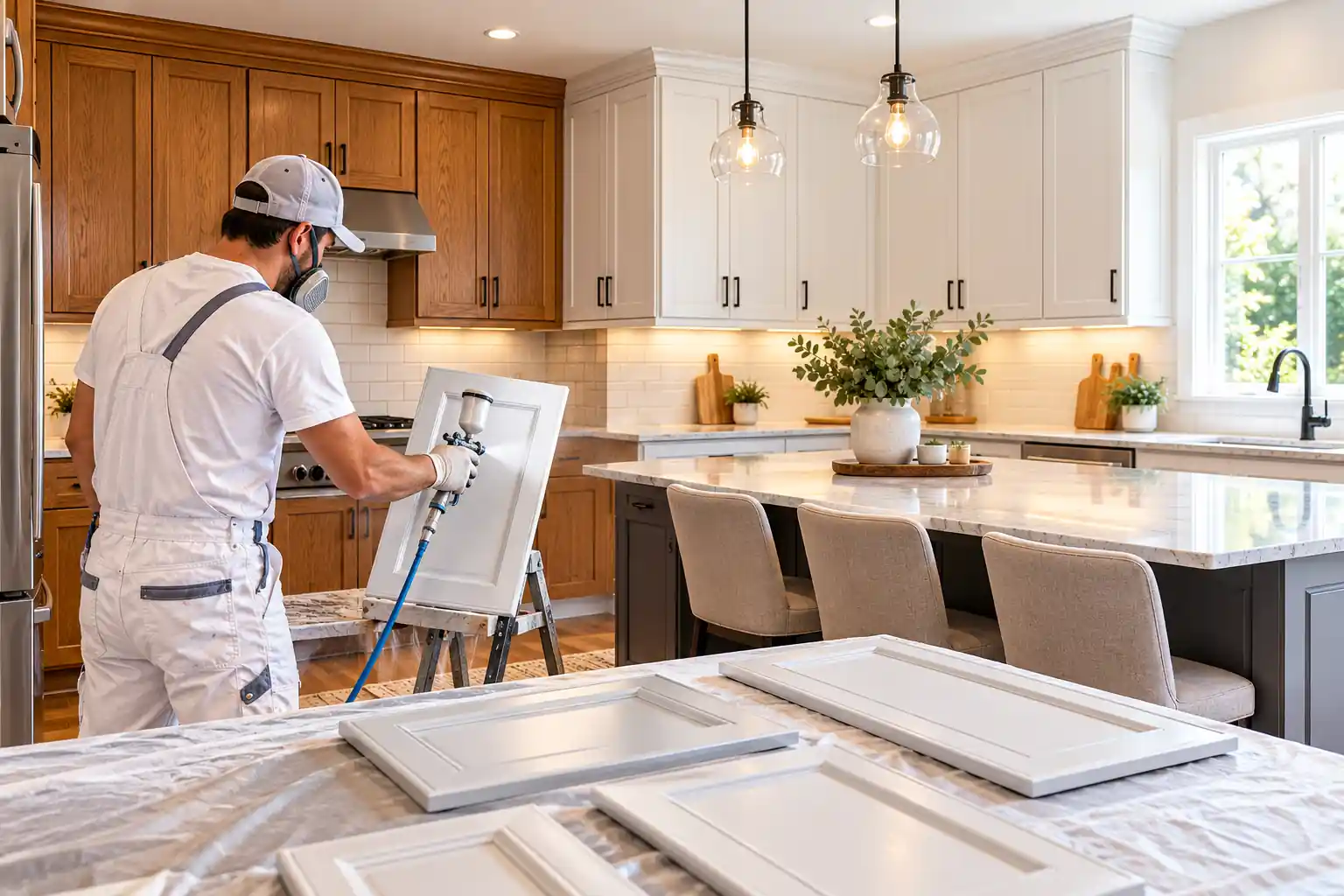
Maybe you spent a Saturday watching tutorial videos and pricing out cabinet paint kits, then closed the laptop without buying anything. Maybe your cabinets have looked tired for two years, but a bathroom remodel or a new roof kept jumping the line. Or maybe you’re getting ready to list your house, and your realtor mentioned that dark oak cabinets aren’t doing you any favors with buyers. Whatever brought you here, you’ve landed on the same decision: update the cabinets instead of replacing them, and find someone to actually do it right.
Now comes the harder part. A quick search turns up dozens of cabinet painters, local painting contractors, and general handymen who all promise beautiful results. Some estimates come in surprisingly low. Others cost two or three times as much for what looks like the same service on paper. So how do you know who’s actually qualified to paint cabinets, especially if a DIY attempt already showed you how easily this can go wrong?
Here’s something worth knowing before you hire anyone: cabinet painting is a completely different skill set from painting walls. Cabinets get touched, wiped, bumped, and exposed to grease and steam every single day. A contractor who does beautiful wall work isn’t automatically equipped to give you a finish that survives daily kitchen life. The contractor you choose has a direct impact on how your cabinets look next month and how they hold up five years from now.
This guide walks you through how to compare cabinet painters, what questions actually matter, and how to hire with confidence instead of guesswork.
The Job You’re Really Trying to Get Done
When you’re vetting cabinet painters, you’re not just hiring someone to apply a coat of paint. You’re trying to move away from something and toward something else.
You’re moving away from:
- A kitchen that feels dated every time you walk into it
- The nagging worry that a DIY attempt would end in drips, brush marks, or peeling within a year
- Losing another weekend to a project that isn’t your actual skill
- The fear of paying a stranger and getting a rushed, sloppy result
And you’re moving toward:
- A kitchen that finally looks the way you pictured it
- A smooth, factory-like finish, not a brushed-on look
- Protection for a major investment in your home
- A finish that holds up for years, not months
- A stronger position if you’re getting ready to sell
Keep both lists in mind as you read every estimate and every sales pitch. The right cabinet painter resolves the first list and delivers the second. The wrong one leaves you right back where you started, just poorer for the experience.
Why Choosing the Right Cabinet Painter Matters
Cabinets take more abuse than almost any other painted surface in your home. They deal with:
- Constant hand contact around knobs and edges
- Grease and steam from daily cooking
- Moisture from dishwashing and spills
- Frequent opening and closing that stresses hinges and edges
- Cleaning products and scrubbing
That combination demands precision work and the right materials. Wall paint isn’t built for this kind of daily wear, and neither is a rushed prep job. Specialized coatings, careful surface preparation, and proper technique are what separate cabinets that look good for a season from cabinets that look good for a decade. This is exactly why cabinet painting requires a different approach than repainting a bedroom wall.
What Makes a Professional Cabinet Painter Different?
A true cabinet specialist brings a process that general painters usually skip or rush through. Here’s what to expect from someone who genuinely knows this trade:
- Real cabinet refinishing experience, not just general painting experience
- Dedicated spray equipment designed for smooth, even coverage
- Thorough cleaning and degreasing before any sanding begins
- Proper sanding and deglossing so new coatings actually bond
- Quality primer suited to your cabinet material
- Dust-controlled spraying in a clean, enclosed environment
- A smooth, factory-quality finish, not visible brush strokes
- Adequate curing time before doors and drawers go back into daily use
Skipping any one of these steps shows up later as peeling, uneven sheen, or a finish that scratches far too easily. Experienced cabinet painters build their process around avoiding exactly those problems.
Questions to Ask Before Hiring Cabinet Painters
Before you sign anything, ask each contractor these questions directly:
- How many cabinet refinishing projects have you completed?
- Can I see photos of recent cabinet projects, not just wall painting?
- What products and coatings do you use on cabinets?
- Do you spray cabinet doors, or brush and roll them?
- Do you remove doors, drawers, and hardware before painting?
- How long does the coating need to cure before normal use?
- Do you offer a written workmanship warranty?
- Who actually performs the work, your crew or subcontractors?
A contractor who specializes in cabinet refinishing will answer these questions quickly and specifically. Vague or hesitant answers are worth paying attention to.
Red Flags That Should Make You Think Twice
Watch for these warning signs while you’re comparing contractors:
- An estimate that’s dramatically lower than every other quote
- No portfolio of past cabinet projects
- No cabinet-specific experience, only general painting work
- No written proposal or scope of work
- A request for full payment upfront
- A vague or rushed explanation of the preparation process
- No warranty offered on the finished work
Any one of these on its own isn’t necessarily disqualifying, but a contractor who checks two or three of these boxes is a real risk to your kitchen. Cabinets are expensive to redo, and a cut-rate job usually costs more in the long run once you factor in a redo.
Cabinet Refinishing vs. Cabinet Painting vs. Cabinet Refacing
These terms get used loosely, and it’s worth understanding what each one actually means before you request quotes.
| Option | What It Involves | Best For |
| DIY Cabinet Painting | Homeowner buys a kit or supplies and paints cabinets themselves | Small, low-visibility projects with realistic expectations about finish quality |
| Cabinet Painting | New paint applied over existing cabinet boxes and doors after prep work | Cabinets in solid structural shape that need a color or style update |
| Cabinet Refinishing | Full process of cleaning, sanding, repairing, priming, and coating cabinets | Cabinets with some wear, minor damage, or an outdated finish that still function well |
| Cabinet Refacing | New veneer or doors applied to existing cabinet boxes | Cabinets with solid boxes but doors that are too damaged or dated to refinish |
| Cabinet Replacement | Entirely new cabinets installed | Cabinets with structural damage, water issues, or layout changes |
A lot of homeowners try the DIY route first, and it’s an honest place to start. But most run into the same wall: without a spray setup, a controlled environment, and the right primer for their cabinet material, brush strokes and uneven sheen show up fast, and those flaws are hard to fix without stripping everything back down. That’s usually the moment DIY turns into a search for a professional.
Beyond that, most homeowners with functional cabinets in decent structural condition are excellent candidates for painting or refinishing. It’s a fraction of the cost of replacement and delivers a dramatic visual change.
How to Compare Estimates Without Focusing Only on Price
Two estimates can look similar on the surface and be worlds apart in what they actually include. Before comparing dollar amounts, check whether each estimate accounts for:
- Full surface preparation, including cleaning and sanding
- Minor repairs to doors, drawers, or cabinet boxes
- Primer appropriate for your cabinet material
- The specific coating or paint being used
- Hardware removal and reinstallation
- Daily cleanup and dust control
- A realistic project timeline
- A written workmanship warranty
The lowest estimate on your list often wins by leaving something out, usually preparation, repairs, or warranty coverage. Once you line up estimates item by item, the real cost difference tends to make a lot more sense.
How to Decide Which Cabinet Painter Is Right for You
Once you’ve collected a few estimates, run each contractor through this decision framework:
- Do they specialize in cabinet refinishing, or is it a side offering?
- Can they walk you through their process step by step?
- Do they have real before-and-after photos of cabinet work?
- Are their reviews consistent across multiple platforms?
- Are they licensed and insured?
- Do they answer your questions clearly and confidently?
- Do you trust their recommendations, even when they don’t push the most expensive option?
A contractor who scores well across all seven of these is someone you can move forward with confidently.
What Results Should You Expect From a Professional Cabinet Painter?
Once the project wraps up, here’s what a quality job should look like:
- A smooth, factory-like finish with no visible brush marks
- Durable coatings that resist chipping and scratching
- Consistent color and sheen across every door and drawer
- A clean work area throughout the project, not just at the end
- An organized process with clear communication along the way
- Minimal disruption to your daily kitchen use
- A finish that holds up for years, not months
If a contractor can’t confidently promise these outcomes, that’s worth noting before you sign anything.
How Brush & Build Helps Homeowners Make the Right Decision
We’d rather earn your trust than win your business with the lowest number on a page. Our approach to cabinet refinishing includes:
- Honest, in-person cabinet evaluations before any quote
- No-pressure consultations that answer your questions directly
- Detailed written estimates that spell out every step
- Professional preparation, including full cleaning, sanding, and priming
- Premium coatings built to handle daily kitchen wear
- Skilled, experienced craftsmanship on every project
- Transparent recommendations, even when that means suggesting something other than refinishing
If your cabinets have structural problems that refinishing can’t fix, we’ll tell you that upfront instead of pushing a project that won’t solve your actual problem. That’s the kind of honesty we’d want if we were the ones hiring a contractor.
The Bottom Line
Choosing a professional cabinet painter isn’t about finding the lowest estimate. It’s about hiring someone who understands how to prepare, refinish, and protect one of the hardest-working surfaces in your home. Ask the right questions, compare more than just price, and take the time to understand what the refinishing process actually involves. Do that, and you’ll hire with real confidence instead of crossing your fingers. Brush & Build helps homeowners throughout Richmond make informed decisions, backed by honest advice, skilled craftsmanship, and cabinet refinishing built to last.
Ready to talk through your kitchen cabinets? Reach out to Brush & Build for a no-pressure consultation and an honest evaluation of your cabinets.
Frequently Asked Questions
How do I choose a professional cabinet painter?
Look for cabinet-specific experience, a real portfolio of past projects, clear answers about their preparation process, and a written warranty. Avoid contractors who can’t show cabinet work beyond general painting jobs.
What should I ask cabinet painters before hiring?
Ask about their experience with cabinets specifically, whether they spray or brush doors, whether they remove hardware, how long coatings need to cure, and whether they offer a workmanship warranty.
Is cabinet refinishing worth it?
For cabinets in solid structural condition, refinishing typically costs a fraction of full replacement while delivering a dramatic visual update. It’s one of the best value updates available for a kitchen.
How long does cabinet painting last?
Professionally painted cabinets with proper preparation and quality coatings can last well over a decade with normal daily use and reasonable care.
Can every cabinet be refinished?
Most cabinets in good structural shape are strong candidates for refinishing. Cabinets with water damage, warping, or significant structural issues usually need repair or replacement instead.
Do cabinet painters remove cabinet doors?
Professional cabinet painters typically remove doors, drawers, and hardware to paint them separately in a controlled environment, which produces a smoother, more even finish than painting in place.
What paint do professional cabinet painters use?
Experienced cabinet painters use specialized coatings designed for durability and adhesion, rather than standard wall paint, since cabinets face far more daily wear.
How long does cabinet painting take?
Most cabinet refinishing projects take several days to about a week, depending on the size of the kitchen, the number of cabinets, and the coating’s curing requirements.
How much does cabinet refinishing cost?
Costs vary based on the size of your kitchen, the condition of your cabinets, and the coatings used. A detailed in-home estimate is the most accurate way to get a real number for your project.
Should I hire local painting contractors?
Local contractors who specialize in cabinet refinishing bring a real advantage: familiarity with local homes, established reputations you can verify, and accountability that’s harder to find with a company from out of the area.